✓ Art history spans millennia, from prehistoric cave paintings to contemporary digital installations.
✓ Major art movements often reflect societal, technological, and philosophical shifts of their time.
✓ Understanding the timeline helps contextualize individual artworks and artists.
✓ There's no single 'correct' art style; each era contributes uniquely to human expression.
How It Works
1
Navigate Chronologically
Our guide presents art history in a clear, easy-to-follow chronological order. This helps you build a foundational understanding of how styles evolved.
2
Explore Key Movements
Each major art movement is broken down into its core characteristics, influential artists, and iconic works. This provides a digestible overview of each period.
3
Connect the Dots
We highlight the relationships and influences between different periods and artists. This helps you see the bigger picture of art's continuous evolution.
4
Engage and Discover
With clear explanations and vivid examples, you'll be able to confidently identify and appreciate various art styles. This empowers you to explore further on your own.
Unveiling the Dawn of Creativity: Prehistoric and Ancient Art
Photo: Jose Luis Vanasco / Pexels
The journey through art history begins not in grand galleries, but in the dimly lit caves and sun-baked plains where humanity first etched its mark on the world. Prehistoric art, stretching back tens of thousands of years, offers a profound glimpse into the earliest stirrings of human consciousness and symbolic thought. The Upper Paleolithic period, roughly 40,000 to 10,000 BCE, is perhaps best known for its astonishing cave paintings, such as those found in Lascaux, France, and Altamira, Spain. These vibrant depictions of bison, horses, and deer, often rendered with remarkable naturalism and dynamic energy, suggest not just an attempt to reproduce reality, but perhaps a ritualistic or spiritual purpose. Hand stencils and abstract symbols further indicate a complex cognitive world. The Neolithic Revolution, beginning around 10,000 BCE, brought about settled agriculture and the rise of permanent communities, profoundly impacting artistic expression. Megalithic structures like Stonehenge emerged, demonstrating sophisticated engineering and an understanding of astronomical alignments, likely serving ceremonial or calendrical functions. Pottery, weaving, and early metallurgy also became prevalent, showcasing both utility and aesthetic decoration. These early forms of art laid the groundwork for the structured societies that would follow.
Moving into the Ancient World, approximately 3500 BCE to 300 CE, we encounter civilizations that developed sophisticated writing systems, complex social hierarchies, and monumental architecture. Mesopotamian art, from Sumerians, Akkadians, Babylonians, and Assyrians, often served political and religious purposes. Ziggurats, towering temple complexes, dominated cityscapes, while cylinder seals and steles depicted rulers, gods, and epic narratives. The Code of Hammurabi, inscribed on a basalt stele, is a prime example of art serving both legal and commemorative functions. Ancient Egyptian art, spanning over three millennia, is perhaps the most iconic for its unwavering consistency and symbolic power. Focused on the afterlife and the divine pharaoh, Egyptian art adhered to strict conventions, including hierarchical scale, composite views (showing figures from multiple perspectives simultaneously), and a limited palette. Pyramids, temples, and elaborate tomb paintings like those in the Valley of the Kings, were meticulously crafted to ensure eternal life and cosmic order. The iconic bust of Nefertiti and the golden mask of Tutankhamun exemplify the mastery of materials and the enduring artistic vision of this civilization. The subsequent Greek and Roman empires would build upon these foundations, creating their own distinct artistic legacies that would heavily influence Western art for centuries to come. Understanding these foundational periods is crucial for any beginner delving into the rich tapestry of art history. They provide the fundamental vocabulary and context for all subsequent developments. These early civilizations, through their art, communicate across millennia, offering insights into their beliefs, daily lives, and aspirations. Discover more about ancient civilizations and their artistic contributions in our dedicated section.
The Classical Legacy and Medieval Masterpieces: From Greece to Gothic
Photo: Sami Aksu / Pexels
The Classical period, roughly 800 BCE to 600 CE, represents a pivotal moment in the art history timeline for beginners, particularly in the Western tradition. Ancient Greek art, beginning with the Geometric and Archaic periods, evolved into the celebrated Classical and Hellenistic eras. Greek art is renowned for its pursuit of ideal beauty, harmony, and proportion, deeply rooted in philosophical ideals. Early kouros and kore statues, rigid and frontal, gradually gave way to the naturalistic and dynamic contrapposto pose seen in masterpieces like the Doryphoros (Spear Bearer) by Polykleitos. Architecture, exemplified by the Parthenon, showcased the Doric, Ionic, and Corinthian orders, emphasizing balance and mathematical precision. Greek pottery, especially red-figure and black-figure vases, provides invaluable insights into daily life, mythology, and artistic techniques. The Hellenistic period saw a shift towards heightened emotion, drama, and realism, with works like the Laocoön Group and the Winged Victory of Samothrace capturing intense human experience. Roman art, while heavily influenced by Greek models, developed its own distinct character. The Romans excelled in engineering and portraiture, creating realistic busts that captured individual likenesses rather than idealized forms. Their architectural innovations, including concrete, arches, and domes, enabled the construction of vast structures like the Colosseum, the Pantheon, and intricate aqueducts, reflecting their imperial power and organizational prowess. Roman frescoes and mosaics decorated villas, offering vibrant glimpses into their domestic lives and mythological beliefs.
The transition from the Classical world to the Medieval period, spanning roughly 500 to 1500 CE, saw a profound shift in artistic focus, largely driven by the rise of Christianity. Early Christian art adapted Roman forms to new religious narratives, often featuring symbolic representations in catacombs and basilicas. Byzantine art, centered in Constantinople, developed a distinct style characterized by glittering mosaics, flattened figures, and a spiritual, otherworldly quality, emphasizing the divine rather than the earthly. Icons, revered images of Christ, Mary, and saints, became central to worship. The Carolingian and Ottonian periods in Western Europe saw a revival of classical elements under Charlemagne and his successors, fostering illuminated manuscripts and ivory carvings that blended classical learning with Christian theology. Romanesque art, emerging around the 11th century, was characterized by robust stone churches with thick walls, rounded arches, and intricate sculptural portals depicting biblical scenes. These churches served as fortresses of faith and pilgrimage destinations, their interiors often adorned with frescoes. The Gothic period, beginning in the mid-12th century, revolutionized architecture with its soaring heights, pointed arches, ribbed vaults, and most famously, its stained-glass windows. Cathedrals like Chartres, Notre Dame, and Reims became breathtaking expressions of divine light and transcendence. Gothic sculpture, while still religious, became more naturalistic and emotionally expressive than its Romanesque predecessors, setting the stage for the Renaissance. This rich tapestry of Medieval art, despite its regional variations, consistently aimed to convey spiritual truths and inspire devotion, offering a stark contrast to the humanistic ideals of the Classical age.
Renaissance to Revolution: Rebirth, Enlightenment, and New Expressions
The Renaissance, a pivotal period from roughly 1300 to 1600 CE, marked a 'rebirth' of classical ideals after the Middle Ages, profoundly shaping the art history timeline for beginners. Originating in Italy, this era emphasized humanism, rational inquiry, and a renewed interest in ancient Greek and Roman philosophy and art. Early Renaissance artists like Giotto and Donatello began to break from Byzantine conventions, introducing greater naturalism and emotional depth. The High Renaissance (c. 1490-1527) saw the emergence of titans like Leonardo da Vinci, Michelangelo, and Raphael. Leonardo's 'Mona Lisa' and 'The Last Supper' exemplify his mastery of sfumato and chiaroscuro, creating unparalleled psychological depth. Michelangelo's 'David' and the Sistine Chapel ceiling showcase his anatomical precision and monumental scale, while Raphael's 'School of Athens' embodies classical harmony and intellectual ambition. This period also saw the development of linear perspective, allowing artists to create convincing illusions of three-dimensional space on a two-dimensional surface, revolutionizing painting. In Northern Europe, artists like Jan van Eyck and Albrecht Dürer utilized meticulous detail and oil paint to achieve stunning realism, often focusing on genre scenes and portraits.
Following the Renaissance, the Mannerist movement (c. 1520-1600) emerged, characterized by elongated forms, artificial poses, and often exaggerated emotional intensity, a reaction against the harmonious balance of the High Renaissance. Artists like Parmigianino and El Greco pushed boundaries of composition and color. The Baroque period (c. 1600-1750), a period of grandiosity and drama, was heavily influenced by the Counter-Reformation. Artists like Caravaggio used dramatic chiaroscuro and intense realism to create emotionally charged scenes, while Bernini's sculptures, such as 'The Ecstasy of Saint Teresa,' combined sculpture, architecture, and light for overwhelming theatrical effects. Peter Paul Rubens's vibrant, dynamic compositions and Rembrandt's profound psychological portraits further defined this era. Architecture became more opulent, with elaborate ornamentation and sweeping curves. The Rococo style (c. 1730-1770) emerged as a lighter, more playful evolution of the Baroque, featuring delicate pastels, curvilinear forms, and themes of aristocratic leisure and romance, exemplified by artists like Fragonard and Watteau.
"This art history timeline for beginners is incredibly helpful! I've always wanted to understand art better, and this guide breaks down complex periods into easily digestible information. I finally feel like I grasp the big picture."
Sarah J. · Austin, TX
★★★★★
"As someone completely new to art history, I found this article to be a fantastic starting point. The chronological flow makes so much sense, and the descriptions of each movement are concise yet informative. Highly recommend!"
Mark D. · Chicago, IL
★★★★★
"I used to feel overwhelmed by art museums, but after reading this art history timeline for beginners, I can now identify major styles and even recognize key artists. It's truly transformed my appreciation for art, leading to more engaging museum visits."
Emily R. · New York, NY
★★★★★
"A very solid introduction to art history. While some sections could delve even deeper, for a beginner's guide, it hits all the crucial points effectively. It's a great foundation for anyone looking to learn more."
David L. · Los Angeles, CA
★★★★★
"I'm a college student taking an intro art history class, and this art history timeline for beginners has been an invaluable study tool. It synthesizes complex information in a way that my textbook sometimes struggles to do, making it much easier to remember."
Jessica M. · Seattle, WA
Frequently Asked Questions
What is the most important period in an art history timeline for beginners?
There isn't one single 'most important' period, as each era contributes uniquely to the overall narrative of art. However, understanding the Renaissance is often considered foundational for Western art, as it reintroduced many classical ideals and innovations that profoundly shaped subsequent movements. For a beginner, focusing on the major shifts from ancient to classical, then to Renaissance, and finally to modern and contemporary art provides a strong framework.
Is it hard to understand art history without an art background?
Absolutely not! This art history timeline for beginners is specifically designed for individuals without prior art background. Art history is about understanding human expression, culture, and society, which are universal concepts. By breaking down complex ideas into simple terms and providing clear examples, anyone can develop a deep appreciation and understanding of art's evolution.
How can I remember all the different art movements and artists?
Start by focusing on the key characteristics and a few iconic artists or artworks for each major movement. Instead of memorizing, try to understand the 'why' behind each change – what societal, technological, or philosophical shifts influenced the art? Creating your own mental timeline, using visual aids, and making connections between periods can also significantly aid retention. Don't try to learn everything at once; consistent, gradual learning is more effective.
What's the value of learning an art history timeline for beginners?
Learning an art history timeline offers immense value beyond just knowing names and dates. It enhances critical thinking, improves visual literacy, and provides a deeper understanding of cultural contexts and human creativity across civilizations. It allows you to appreciate the evolution of ideas, recognize influences, and even inform your own creative endeavors, connecting you to a shared human legacy.
How does this timeline compare to a university art history course?
This art history timeline for beginners serves as an excellent foundational overview, covering the major periods and movements in a digestible format. A university course would delve much deeper into specific artists, theories, stylistic analyses, and critical interpretations, often focusing on particular regions or themes. Think of this guide as a robust introductory map, preparing you for more detailed explorations that a university course would offer.
Who should use this art history timeline for beginners?
This timeline is perfect for anyone curious about art, from high school students and lifelong learners to travelers wanting to better understand the art they see in museums and historical sites. It's also ideal for aspiring artists looking for historical context or simply anyone who wants to enrich their cultural knowledge and appreciation for human creativity.
Are there any 'wrong' ways to appreciate art according to this timeline?
There's no 'wrong' way to appreciate art! This timeline is a tool to enhance your understanding and enjoyment, not dictate your feelings. Art is subjective and deeply personal. The goal is to provide context so that you can form more informed opinions and deepen your connection with artworks, regardless of whether you personally like a particular style or not. Curiosity and an open mind are the best approaches.
What are the future trends in art history education?
Future trends in art history education are increasingly leveraging digital tools, virtual reality, and augmented reality to make art more accessible and interactive. Expect more immersive online experiences, digital archives, and virtual museum tours. There's also a growing emphasis on global art histories, decolonizing curricula, and incorporating interdisciplinary approaches, connecting art with science, technology, and social justice movements.
Embark on your artistic journey today with this comprehensive art history timeline for beginners. Uncover the stories, movements, and masterpieces that have shaped human creativity and enrich your understanding of the world around you.
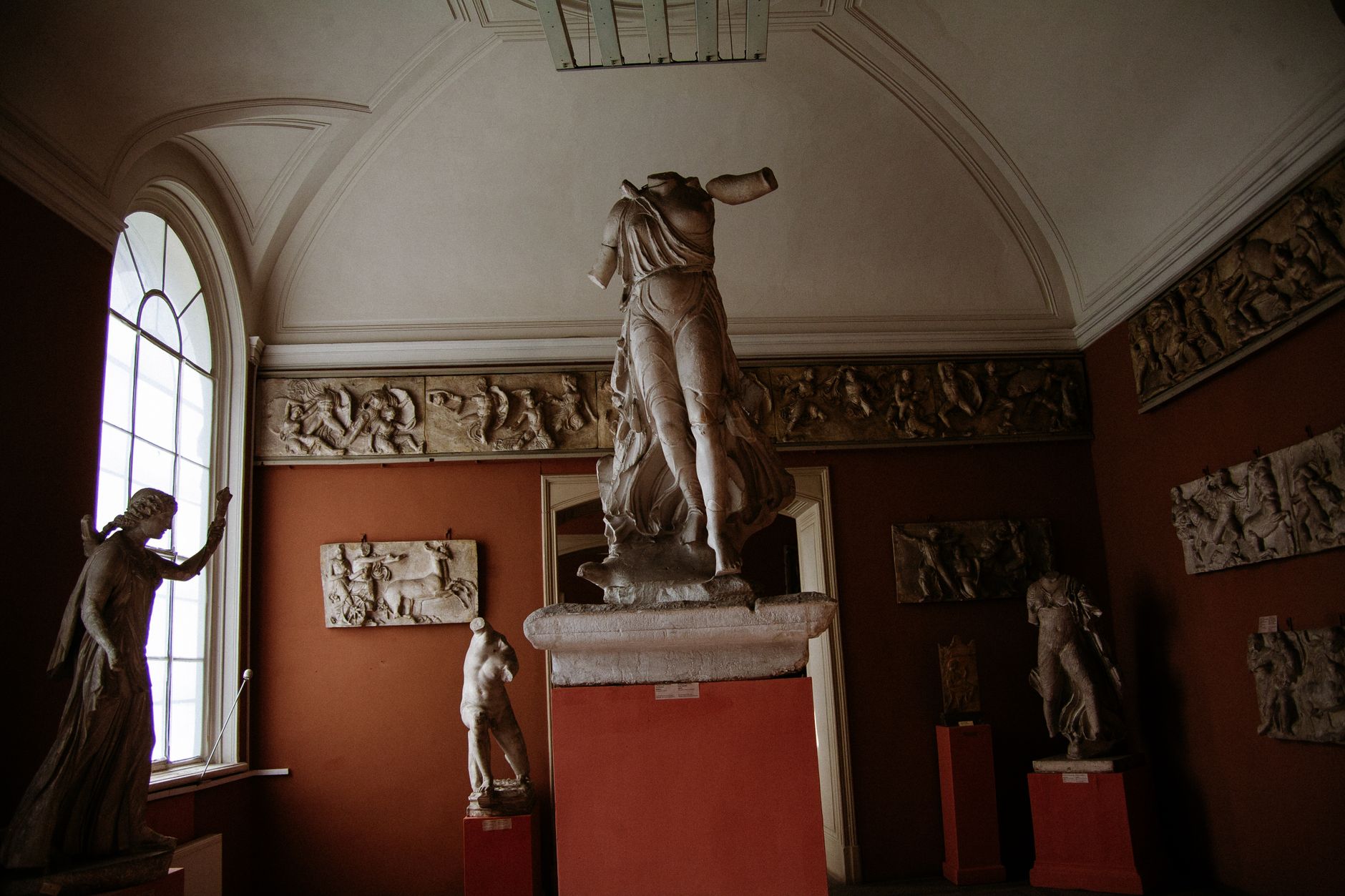
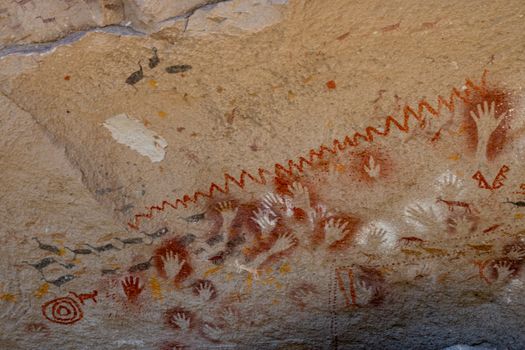 Photo: Jose Luis Vanasco / Pexels
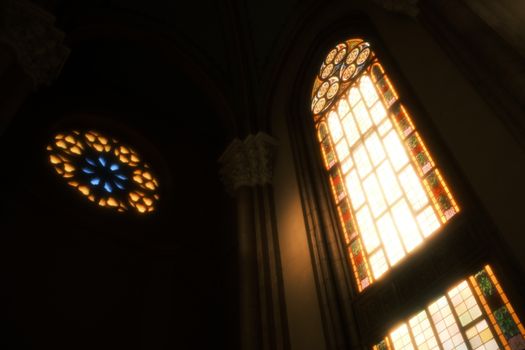 Photo: Sami Aksu / Pexels