Mastering the Art History Timeline: Major Movements Unveiled

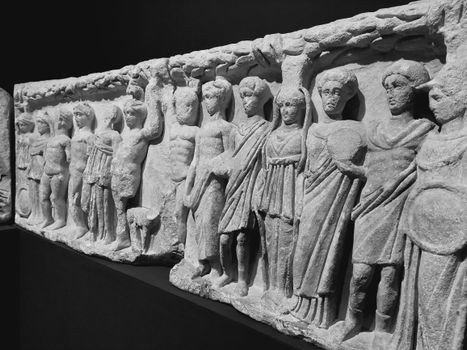
Black and white photo of an ancient stone relief showcasing human figures in İzmir, Türkiye museum.Photo: Selin Karaman / Pexels

Mastering the Art History Timeline: Major Movements Unveiled

Journey through millennia of human creativity, from ancient wonders to contemporary expressions, and discover the forces that shaped our visual world.

Begin Your Art Journey

Key Takeaways

  • ✓ Art history spans over 40,000 years, beginning with prehistoric cave paintings.
  • ✓ Major art movements are often reactions to or evolutions of previous styles and societal changes.
  • ✓ The Renaissance marked a profound shift towards humanism and naturalism in art.
  • ✓ Modern art movements challenged traditional aesthetics, emphasizing abstraction and individual expression.

How It Works

1
Understand Chronology

Grasp the sequential order of major art periods, recognizing how one era paved the way for the next. This foundational understanding is crucial for contextualizing artistic developments.

2
Identify Key Characteristics

Learn the defining stylistic elements, themes, and techniques of each movement. This allows for quick recognition and deeper appreciation of individual artworks.

3
Connect to Context

Explore the historical, social, and philosophical backdrop against which art was created. Understanding the 'why' behind the art enriches your interpretation and appreciation.

4
Analyze Masterpieces

Apply your knowledge by critically examining iconic works from various periods. This practical application solidifies your understanding of the art history timeline.

The Dawn of Creativity: Prehistoric and Ancient Art Foundations
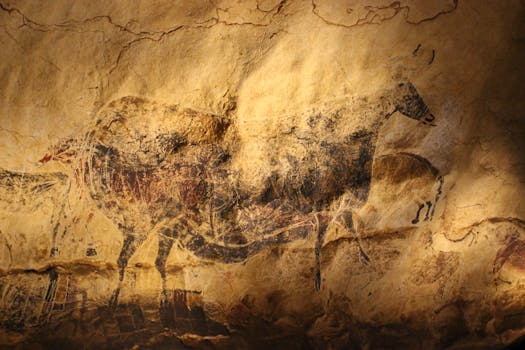
Explore the historic Lascaux cave painting, a UNESCO World Heritage site.Photo: toshihiko tanaka / Pexels
The story of art begins not in grand museums or sophisticated academies, but in the depths of ancient caves and the nascent settlements of early human civilization. Long before written language, before complex societies, our ancestors left indelible marks that speak volumes about their lives, beliefs, and burgeoning creative impulse. This foundational period, stretching from the Upper Paleolithic era to the fall of the Roman Empire, lays the groundwork for every subsequent art history timeline major movements. Prehistoric art, primarily found in caves like Lascaux and Altamira, offers a mesmerizing glimpse into the minds of hunter-gatherers. These charcoal and ochre paintings, often depicting animals with astonishing naturalism and vitality, served purposes that remain subjects of scholarly debate: ritualistic magic for successful hunts, storytelling, or perhaps expressions of reverence for the natural world. Portable art, such as the 'Venus' figurines, suggests early explorations of human form and fertility symbolism. These early expressions, though rudimentary in tools, are profound in their communicative power, demonstrating humanity's innate desire to represent and understand its world. As societies grew more complex, so too did their art. Ancient Egyptian art, spanning thousands of years, is characterized by its remarkable consistency, adherence to strict conventions, and profound connection to the afterlife. From monumental pyramids and intricate tomb paintings to hieroglyphics and sculpted pharaohs, Egyptian art was didactic and symbolic, designed to ensure order in the cosmos and eternal life for the deceased. Its frontal poses, composite views, and hierarchical scale communicated status and divine power, reflecting a deeply religious and structured society. The emphasis was not on individual expression but on maintaining tradition and cosmic balance. Following Egypt, the civilizations of the Near East, including Mesopotamia, Assyria, and Persia, developed distinct artistic traditions. Sumerian art, for example, is known for its votive statues with wide, staring eyes, symbolizing perpetual prayer. Assyrian reliefs celebrated military prowess and royal hunts with dynamic, narrative scenes. Persian art, influenced by its diverse empire, blended various styles into a sophisticated imperial aesthetic, exemplified by the intricate carvings of Persepolis. The classical world of Greece and Rome then ushered in a new era. Ancient Greek art, particularly sculpture, sought to capture idealized human beauty, athletic perfection, and philosophical concepts like democracy and reason. The progression from the rigid, stylized forms of the Archaic period to the naturalistic, contrapposto poses of the Classical period, and finally to the emotional intensity of the Hellenistic era, showcases a profound evolution in artistic skill and thematic depth. Greek architecture, with its Doric, Ionic, and Corinthian orders, established enduring principles of proportion and harmony. The internal link of classical aesthetics became a benchmark for centuries. Roman art, while heavily influenced by Greek models, developed its own unique character. The Romans excelled in portraiture, capturing individual likenesses with unprecedented realism, and in monumental architecture and engineering, such as the Colosseum and Pantheon. Their narrative reliefs, like those on Trajan's Column, celebrated imperial victories and public works. Roman art was often functional and propagandistic, reflecting their pragmatic and imperial ambitions. This vast and varied ancient period laid the essential groundwork, providing both techniques and conceptual frameworks that later movements would either build upon, react against, or rediscover.

Medieval Marvels and Renaissance Rebirth: Faith, Humanism, and Innovation
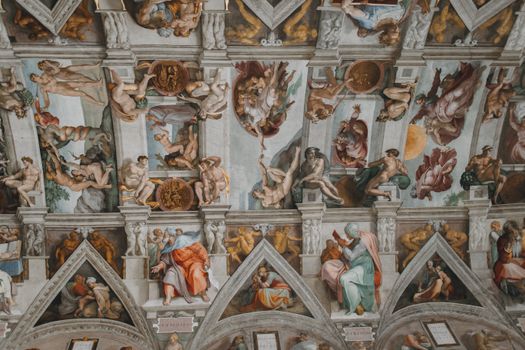
Iconic Sistine Chapel ceiling painting highlighting biblical scenes and figures by Michelangelo.Photo: Alina Rossoshanska / Pexels
Following the decline of the Roman Empire, Europe entered a period often termed the Middle Ages, an era spanning roughly a thousand years where art was predominantly shaped by religious devotion and the rise of Christianity. This long period, crucial to understanding the art history timeline major movements, saw diverse artistic expressions from Byzantium to the Gothic cathedrals of Western Europe. Byzantine art, flourishing in the Eastern Roman Empire, maintained a strong connection to classical forms but infused them with profound Christian symbolism. Characterized by glittering mosaics, iconic paintings, and elaborate manuscript illuminations, Byzantine art was abstract, spiritual, and hierarchical. Figures were often elongated, with large, expressive eyes, conveying a sense of transcendence rather than earthly realism. Gold backgrounds and rich colors emphasized the divine and otherworldly nature of the subjects, serving to inspire awe and devotion in worshippers. In Western Europe, early medieval art reflected the turbulent times and the fusion of Roman, Christian, and 'barbarian' influences. Celtic knotwork, Anglo-Saxon metalwork, and illuminated manuscripts like the Book of Kells showcase intricate patterns and vibrant colors, often devoid of classical perspective but rich in symbolic meaning. The Romanesque period (c. 1000-1200 AD) saw the construction of massive stone churches with sturdy forms, rounded arches, and often didactic sculptural programs depicting biblical narratives for a largely illiterate populace. Art served as a powerful tool for religious instruction and storytelling. The Gothic era, emerging in the mid-12th century, marked a dramatic shift, most notably in architecture with the soaring cathedrals of France. Innovations like the pointed arch, ribbed vault, and flying buttress allowed for thinner walls, larger windows, and a sense of verticality that aspired towards heaven. Stained-glass windows filled these spaces with kaleidoscopic light, depicting sacred stories. Gothic sculpture became more naturalistic, with figures detaching from the architectural frame and displaying increased emotional depth and grace. This period brought a newfound elegance and aspiration to religious art. The Renaissance, beginning in Italy in the 14th century and flourishing in the 15th and 16th centuries, represents a seismic shift in Western art and thought. It was a 'rebirth' of classical ideals, fueled by humanism, a philosophical movement that placed man at the center of the universe, emphasizing human potential and achievement. Artists like Giotto had already begun to introduce greater realism and emotional depth, breaking from Byzantine conventions, but the High Renaissance masters—Leonardo da Vinci, Michelangelo, and Raphael—epitomized this era. Leonardo's scientific curiosity led to unprecedented anatomical accuracy and the revolutionary use of sfumato. Michelangelo's powerful sculptures and monumental Sistine Chapel frescoes celebrated the idealized human form as divine. Raphael's harmonious compositions and serene Madonnas embodied classical balance and beauty. The development of linear perspective by Brunelleschi and Alberti created the illusion of three-dimensional space on a two-dimensional surface, fundamentally altering how artists represented the world. This period saw a renewed interest in classical mythology alongside Christian themes, a focus on individual genius, and the elevation of the artist's status from craftsman to intellectual. The Northern Renaissance, meanwhile, developed its own distinct character, emphasizing meticulous detail, rich symbolism, and oil painting techniques, exemplified by artists like Jan van Eyck and Albrecht Dürer. The Renaissance set new standards for technical mastery, naturalism, and intellectual engagement that would influence the art history timeline for centuries to come.

From Baroque Grandeur to Modernist Revolutions: Shaping the Contemporary Eye

The centuries following the Renaissance saw a dynamic interplay of artistic styles, each responding to the social, political, and philosophical currents of their time. This period, leading up to and encompassing the modern era, is characterized by an accelerating pace of change and a constant redefinition of what art could be, profoundly impacting the art history timeline major movements. The Baroque period (early 17th to mid-18th century) emerged in response to the Protestant Reformation and the Catholic Counter-Reformation. It was an era of drama, emotion, and grandeur, designed to evoke awe and inspire religious fervor. Artists like Caravaggio used dramatic chiaroscuro (light and shadow) to create intense emotional impact, while Bernini's sculptures burst forth with theatrical energy. Rubens's dynamic compositions and vibrant colors captured movement and passion. In architecture, Baroque churches and palaces were characterized by opulent decoration, elaborate facades, and expansive spaces, all designed to overwhelm the senses and convey power—both spiritual and secular. The Rococo style, a lighter, more playful, and ornamental offshoot of the Baroque, emerged in the 18th century, particularly in France, focusing on aristocratic leisure, delicate colors, and asymmetrical designs. The Enlightenment brought Neoclassicism (late 18th to early 19th century), a return to the perceived purity and moral grandeur of classical Greek and Roman art, inspired by new archaeological discoveries and the ideals of reason and civic virtue. Artists like Jacques-Louis David created works that emphasized clear lines, rational compositions, and heroic themes, often serving as propaganda for revolutionary ideals. This was quickly followed by Romanticism (early to mid-19th century), a reaction against the cold rationalism of Neoclassicism, emphasizing emotion, individualism, the sublime in nature, and the exotic. Artists like Eugène Delacroix and J.M.W. Turner explored intense feelings, dramatic narratives, and vibrant color, valuing imagination over strict reason. Mid-19th century art saw the rise of Realism, a direct challenge to the idealized forms of Neoclassicism and the emotional excesses of Romanticism. Realist artists like Gustave Courbet sought to depict everyday life and ordinary people with unflinching honesty, often focusing on social issues. This paved the way for Impressionism (late 19th century), a revolutionary movement that captured fleeting moments, the effects of light and atmosphere, and the subjective perception of reality. Monet, Renoir, and Degas broke from academic traditions, using visible brushstrokes and vibrant, unblended colors. Post-Impressionism, including artists like Van Gogh, Cézanne, and Gauguin, built upon Impressionist innovations but explored personal expression, symbolic meaning, and structural form with greater intensity. The 20th century unleashed an explosion of modernist movements, each pushing the boundaries of artistic representation and challenging conventional notions of beauty and purpose. Fauvism, Cubism (Picasso and Braque deconstructed form into geometric planes), Expressionism (emotional distortion of reality), Futurism (celebrating technology and speed), and Surrealism (exploring the subconscious and dreams) radically reshaped the art world. Abstract Expressionism, led by artists like Jackson Pollock, became the dominant force in post-World War II American art, emphasizing spontaneous, non-representational expression. The internal link of modern art's evolution continued with Pop Art, Minimalism, Conceptual Art, and countless others, each reflecting a world of unprecedented change, conflict, and technological advancement, forever altering how we perceive and create art.

Navigating the Art History Timeline: Tips for Deeper Understanding

Understanding the vast and intricate art history timeline major movements can seem daunting, but with a structured approach, it becomes an incredibly rewarding journey. Here are some invaluable tips to help you navigate this rich landscape and avoid common pitfalls. Firstly, **context is king**. Art does not exist in a vacuum. Always consider the historical, social, political, and philosophical backdrop against which a movement or artwork was created. For instance, the Reformation profoundly influenced Baroque art, just as the Industrial Revolution and two World Wars shaped modernism. Understanding these external forces provides crucial insight into the artist's motivations and the work's meaning. Don't just memorize dates and names; strive to understand the 'why.' Secondly, **look for patterns and reactions**. Art history is rarely a linear progression. Movements often emerge as reactions against previous styles. Realism rebelled against Romanticism's excesses; Impressionism challenged academic painting; Cubism broke from traditional perspective. Identifying these cause-and-effect relationships helps you connect the dots and see the continuous dialogue between artists across time. Ask yourself: "What was this movement responding to?" and "How did it differ from what came before?" Thirdly, **engage actively with the art**. Don't just passively view images. Spend time truly looking at artworks. Analyze their composition, color palette, brushwork, subject matter, and emotional impact. Visit museums and galleries whenever possible. Seeing art in person provides a tactile and immersive experience that reproductions cannot replicate. Pay attention to scale, texture, and the subtleties of light. Consider how the artist used specific techniques to achieve their desired effect. Fourthly, **don't be afraid to specialize**. While a broad overview is essential, allowing yourself to delve deeply into a period or movement that particularly fascinates you can greatly enhance your overall understanding. Passion fuels learning. Whether it's the symbolism of Byzantine mosaics or the psychological depth of Dutch Golden Age portraits, a focused study can illuminate broader themes and artistic principles that apply across the timeline. Lastly, **utilize diverse resources**. Beyond textbooks, explore documentaries, online courses, academic journals, and artist biographies. Podcasts and virtual museum tours offer accessible ways to deepen your knowledge. Engage in discussions with fellow art enthusiasts. The more varied your input, the more comprehensive your understanding will become. **Common Mistakes to Avoid:** * **Viewing art in isolation:** Forgetting the historical context leads to misinterpretations. * **Judging past art by present standards:** Each era had its own aesthetic values and technical limitations. * **Over-reliance on memorization:** Rote learning without understanding connections is ineffective. * **Ignoring the 'why':** Focusing only on 'what' without considering the deeper meaning or purpose of the art. * **Dismissing entire periods:** Every movement, no matter how challenging to modern sensibilities, offers valuable insights into human creativity and culture. By embracing these tips and avoiding these common pitfalls, you can transform your appreciation of the art history timeline from a simple chronology into a profound journey through human expression.

Comparison

FeatureRenaissanceBaroqueImpressionismCubism
Time Period14th-16th Century17th-mid 18th CenturyLate 19th CenturyEarly 20th Century
Key FocusHumanism, Idealism, NaturalismDrama, Emotion, GrandeurLight, Atmosphere, SubjectivityGeometric Forms, Multiple Perspectives
Dominant ThemesReligious, Classical MythologyReligious, Royal Power, SaintsEveryday Life, LandscapesStill Life, Portraits, Figures
TechniquesLinear Perspective, SfumatoChiaroscuro, Dynamic CompositionVisible Brushstrokes, Pure ColorAnalytical & Synthetic Abstraction
Emotional ToneCalm, Balanced, HarmoniousIntense, Theatrical, EmotionalFleeting, ObservationalIntellectual, Deconstructive

What Our Readers Say

5 ★★★★★

"This article on the art history timeline major movements is incredibly thorough and well-organized. It helped me connect the dots between periods I previously saw as isolated. A truly invaluable resource for students and enthusiasts alike."

5 ★★★★★

"As an art lover, I'm always looking for comprehensive guides. This piece exceeded my expectations, offering deep insights into each movement's context and evolution. It's a fantastic educational tool."

5 ★★★★★

"I used this guide to prepare for a university art history exam, and it was instrumental in achieving an 'A'. The clear explanations and practical tips made complex concepts much easier to grasp. Highly recommend!"

4 ★★★★☆

"While very comprehensive, a few more visual examples directly linked within the text would enhance the experience even further. Nevertheless, the depth of content on art history timeline major movements is exceptional and truly helpful."

5 ★★★★★

"My passion for art has been reignited after reading this. It breaks down the art history timeline into digestible, fascinating segments, making the journey through time an absolute pleasure. Perfect for anyone wanting a deeper understanding."

Frequently Asked Questions

What is the earliest known major art movement?
The earliest known major art expressions belong to the Prehistoric period, specifically the Upper Paleolithic era, dating back over 40,000 years. This includes cave paintings like those in Lascaux, France, and Altamira, Spain, as well as small sculpted figurines. These early artworks often depicted animals and human forms, serving various purposes from ritualistic magic to early forms of storytelling.
Why is it important to study the art history timeline major movements?
Studying the art history timeline is crucial because it provides insight into human civilization, culture, and thought across different eras. Art reflects societal values, technological advancements, philosophical shifts, and political landscapes. Understanding these movements helps us appreciate the evolution of human creativity, contextualize contemporary art, and develop critical thinking skills about visual culture.
How can I effectively remember the characteristics of different art movements?
To effectively remember characteristics, focus on identifying 2-3 defining features for each movement (e.g., Neoclassicism: clear lines, civic virtue, classical themes). Create a mental 'snapshot' of a representative artwork for each. Additionally, look for how movements reacted to or built upon previous ones, forming a narrative rather than isolated facts. Regular review and comparison charts are also highly effective tools.
Is modern art less skilled than classical art?
This is a common misconception. Modern art is not inherently less skilled, but its definition of 'skill' often shifted from strict naturalistic representation to conceptual innovation, emotional expression, and exploration of new mediums. While classical art emphasized technical mastery in rendering reality, modern art prioritized breaking conventions and exploring new ways of seeing and interpreting the world. Both require immense talent and vision, just in different forms.
How do art movements influence each other?
Art movements rarely exist in isolation; they are in constant dialogue. A new movement often emerges either as a direct reaction against the perceived limitations or excesses of a previous style (e.g., Romanticism reacting to Neoclassicism, Realism reacting to Romanticism) or by building upon innovations of an earlier movement (e.g., Post-Impressionism expanding on Impressionism's use of color and light). This continuous influence creates a dynamic and interconnected art history timeline.
Who should use this guide to art history timeline major movements?
This comprehensive guide is ideal for art history students, general art enthusiasts, educators, museum visitors looking for deeper context, and anyone with a curiosity about the visual arts. It's structured to provide both a broad overview and detailed insights, making it valuable for beginners and those seeking to refresh or expand their existing knowledge.
Are there any risks in oversimplifying art movements?
Yes, oversimplifying art movements can lead to a shallow understanding and misinterpretation. Each movement is complex, often containing diverse artists and sub-styles. Reducing them to a single characteristic can ignore nuances, internal debates, and the individual genius of artists. It's important to remember that these 'movements' are often constructs applied in retrospect, and artists themselves may not have strictly adhered to perceived stylistic boundaries.
What future trends might impact the art history timeline?
Future trends are likely to be heavily influenced by technology, globalization, and evolving social consciousness. Digital art, AI-generated art, virtual and augmented reality experiences, and art addressing global issues like climate change or identity politics are already emerging. The increasing interconnectedness of cultures will also likely lead to more cross-cultural influences and a less Eurocentric art historical narrative.

Embark on your journey through the captivating art history timeline major movements. Deepen your appreciation for human creativity and the stories embedded in every brushstroke and chisel mark. Start exploring today and unlock a richer understanding of our visual heritage.

Topics: art history timeline major movementsart history periodsart movements explainedhistory of artvisual arts evolution
Leo List
Brampton weed
Adultwork