Explore Different Types of Art Styles & Find Your Vision
different types of art styles

Explore Different Types of Art Styles & Find Your Vision

Dive into the rich tapestry of artistic creation and understand the unique characteristics that define each style.

Start Exploring

Key Takeaways

  • ✓ Art styles are categorized by their distinctive visual characteristics, techniques, and underlying philosophies.
  • ✓ Understanding art styles enhances appreciation and allows for deeper critical analysis of artworks.
  • ✓ Many modern art styles emerged as reactions to or extensions of previous movements.
  • ✓ Artists often blend elements from various styles to create unique personal expressions.

How It Works

1
Identify Key Characteristics

Learn to recognize the defining visual elements, such as brushwork, color palette, subject matter, and composition, that distinguish one style from another. This initial recognition is crucial for categorizing art.

2
Understand Historical Context

Delve into the societal, cultural, and technological influences that gave rise to each art style. Understanding the 'why' behind a style provides invaluable insight into its meaning and impact.

3
Explore Influential Artists

Familiarize yourself with the pioneers and prominent figures associated with each style. Their works often exemplify the core tenets and push the boundaries of their respective movements.

4
Connect Styles & Movements

Recognize how different art styles evolved, influenced, and often reacted to each other throughout history. This interconnectedness reveals the dynamic progression of artistic thought and creation.

Unpacking the Foundations: Classical & Traditional Art Styles
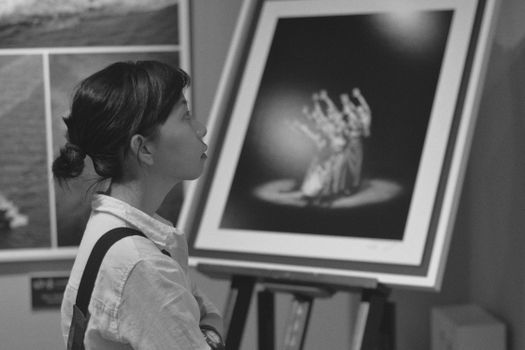
A woman gazing at a black and white painting in an art gallery setting. Capturing art appreciation. Photo: Như Vân ( Wind’s Buddha ) / Pexels
The journey through different types of art styles often begins with the classical and traditional movements, which laid the groundwork for much of what followed. These styles are characterized by a focus on realism, idealism, and often, narratives drawn from mythology, religion, or historical events. Ancient Egyptian art, for instance, is instantly recognizable by its hierarchical scale, composite views (showing figures from multiple angles simultaneously), and symbolic imagery, all serving to reinforce religious beliefs and the power of pharaohs. Greek and Roman art, on the other hand, championed humanism, striving for idealized beauty, anatomical precision, and dramatic storytelling. The Renaissance, a rebirth of classical ideals in Europe, further refined these principles, emphasizing perspective, chiaroscuro (light and shadow), and sfumato (soft, hazy transitions) to create unprecedented depth and realism. Artists like Leonardo da Vinci and Michelangelo mastered these techniques, producing works that continue to inspire awe. Baroque art, emerging in the 17th century, took Renaissance dynamism to an extreme, embracing drama, intense emotion, and opulent grandeur, often with swirling compositions and rich colors to evoke a sense of awe and movement. Rococo, a lighter, more playful evolution, favored delicate pastels, elaborate ornamentation, and themes of aristocracy and romance. These foundational styles, while distinct, share a common thread of meticulous craftsmanship and a desire to represent the world, or an idealized version of it, with precision and emotional resonance. Understanding these historical roots is crucial for appreciating the subsequent shifts and rebellions in the art world, as later movements often defined themselves in opposition to these established norms. Their influence remains pervasive, subtly shaping contemporary aesthetics and providing a rich vocabulary for artistic expression even today. For a deeper dive into the broader scope of artistic periods, explore the history of art. Many artists today still draw inspiration from these enduring principles, adapting them to modern contexts and media, proving that the classical never truly goes out of style.

The Revolutionary Spirit: Modern & Avant-Garde Art Styles

The turn of the 19th and 20th centuries witnessed a radical departure from traditional artistic conventions, giving rise to a plethora of modern and avant-garde different types of art styles. Impressionism, a pivotal movement, rejected the strictures of academic painting, focusing instead on capturing fleeting moments, light, and atmosphere through visible brushstrokes and vibrant, unmixed colors. Artists like Monet sought to convey the 'impression' of a scene rather than its precise photographic reality. Post-Impressionism, while building on Impressionist color and light, introduced a more structured approach, emphasizing emotional expression and symbolic content. Van Gogh's swirling impasto and expressive hues exemplify this shift. Cubism, pioneered by Picasso and Braque, shattered traditional perspective, representing subjects from multiple viewpoints simultaneously, dissecting and reassembling them into geometric forms. This challenged viewers to see the world in a fundamentally new way. Futurism, emerging in Italy, embraced speed, technology, and the dynamism of modern life, often depicting motion and industrial landscapes. Expressionism, prevalent in Germany, prioritized emotional experience over objective reality, using distorted figures and intense colors to convey inner turmoil and psychological states. Dadaism, a rebellious anti-art movement born out of the horrors of World War I, challenged the very definition of art, employing absurdity, collage, and ready-mades to critique societal norms. Surrealism, developed from Dada, delved into the subconscious mind, juxtaposing dreamlike imagery and illogical scenes to unlock hidden truths. These movements, diverse in their approaches, shared a common goal: to break free from the past, innovate, and reflect the rapidly changing world and psychological landscape of the modern era. They paved the way for abstract art, where representation was entirely abandoned in favor of pure form, color, and line, opening up endless possibilities for artistic exploration and personal expression. The sheer variety within this period highlights a profound shift in artistic intent, from imitation to interpretation and innovation.

Contemporary Explorations: Diverse Types of Art Styles Today

As we move into the latter half of the 20th century and the 21st century, the landscape of different types of art styles becomes even more varied and fluid, often blurring lines between disciplines and challenging traditional definitions. Pop Art, a vibrant movement of the 1950s and 60s, famously incorporated imagery from popular culture, advertising, and mass media, often with bold colors and commercial printing techniques. Andy Warhol's iconic silk screens of consumer products and celebrity portraits are prime examples, reflecting and critiquing consumerism. Minimalism, in stark contrast, sought to reduce art to its essential elements, focusing on geometric forms, repetition, and industrial materials, often creating large-scale, austere installations that emphasize space and viewer experience. Conceptual Art prioritized the idea or concept behind the artwork over its aesthetic or material form, often challenging viewers to engage intellectually rather than purely visually. Performance Art, another significant development, uses the artist's body, live action, and audience interaction as the medium, creating ephemeral, time-based works that often explore social or political themes. Street Art and Graffiti, once considered vandalism, have evolved into recognized art forms, transforming urban spaces with murals, stencils, and tags that often convey powerful social commentary or simply add beauty. Digital Art, encompassing everything from computer-generated imagery to interactive installations and virtual reality experiences, leverages technology to create entirely new visual and sensory experiences. Postmodernism, a broad philosophical and artistic movement, questions grand narratives, embraces eclecticism, irony, and often references past art styles, deconstructing and recontextualizing them. The contemporary art world celebrates diversity, experimentation, and often, a direct engagement with societal issues, personal identity, and the environment. Artists frequently blend elements from various styles, creating hybrid forms that resist easy categorization. This dynamic environment encourages continuous innovation and a constant re-evaluation of what art can be, reflecting the complex and interconnected nature of our global society. For insights into the techniques that underpin many of these contemporary works, explore advanced art techniques.

Navigating Artistic Choices: Tips for Identifying & Appreciating Art Styles

Understanding the different types of art styles can feel overwhelming given the sheer volume and diversity. However, with a few key approaches, you can enhance your appreciation and even begin to identify styles more confidently. Firstly, always consider the historical context. When was the piece created? What major social, political, or technological events were happening at that time? These factors often profoundly influence artistic expression. Secondly, pay close attention to the visual elements: the artist's use of color, line, shape, texture, and form. Is the color vibrant or muted? Are the lines sharp or soft? Is the texture smooth or rough? These details are stylistic fingerprints. Thirdly, analyze the subject matter and themes. Is it a portrait, a landscape, an abstract composition, or a commentary on society? The choice of subject often aligns with specific stylistic intentions. Finally, don't be afraid to read the accompanying labels or research the artist and their period. Art history is a continuous dialogue, and understanding previous conversations helps make sense of current ones. Avoid these common mistakes: * **Don't generalize too broadly:** While styles share characteristics, avoid lumping too many disparate works together. Look for nuances. * **Don't dismiss what you don't immediately understand:** Many groundbreaking styles were initially met with skepticism. Give challenging art time and an open mind. * **Don't assume all art fits neatly into one box:** Many artists blend styles or defy categorization entirely. Be open to hybrid forms. * **Don't rely solely on surface-level aesthetics:** Dig deeper into the 'why' behind the art. What was the artist trying to communicate? * **Don't feel pressured to like every style:** Art is subjective. It's okay to have preferences, but strive to understand even the styles that don't personally resonate with you. By adopting these strategies, you can transform your experience of art from passive viewing to active engagement, unlocking deeper layers of meaning and enjoyment.

Comparison

FeatureImpressionismCubismPop ArtMinimalism
Key FocusLight & AtmosphereMultiple PerspectivesPopular CultureSimplicity & Form
Color PaletteBright, Visible strokesMuted, Earthy tonesBold, Primary colorsLimited, Monochromatic
Subject MatterLandscapes, Everyday lifeStill lifes, FiguresConsumer products, CelebritiesGeometric shapes, Industrial materials
TechniqueLoose brushworkGeometric deconstructionScreen printing, CollageRepetition, Clean lines
Emotional ImpactEvocative, SensoryIntellectual, ChallengingPlayful, CriticalContemplative, Austere

What Readers Say

"This article on different types of art styles was incredibly insightful. It perfectly breaks down complex movements into understandable concepts, making art history accessible and engaging. I now feel much more confident identifying styles."

Sarah J. · Austin, TX

"As an aspiring artist, understanding different types of art styles is crucial. This guide provides a fantastic overview, highlighting key characteristics and historical contexts. It's a goldmine of information."

Mark D. · Brooklyn, NY

"I used to feel lost in art museums, but after reading this, I can actually recognize and appreciate different types of art styles. The breakdown of modern movements was particularly helpful, resulting in a much richer museum visit last weekend."

Emily R. · Seattle, WA

"A very comprehensive guide to different types of art styles. While it covers a lot, I would have loved to see a bit more on African or Asian art traditions. Still, an excellent resource for Western art history."

David L. · Chicago, IL

"This article is a brilliant starting point for anyone curious about art. The way it connects different types of art styles chronologically and thematically made everything click. Highly recommend for students and enthusiasts alike."

Jessica M. · Miami, FL

Frequently Asked Questions

What are the most common different types of art styles?

While there are countless art styles, some of the most commonly recognized include Classical, Renaissance, Baroque, Impressionism, Cubism, Surrealism, Pop Art, and Abstract Expressionism. Each has distinct characteristics in terms of technique, subject matter, and underlying philosophy, reflecting the era in which it emerged.

Why do artists choose a particular art style?

Artists choose a particular art style for various reasons, including personal expression, the message they wish to convey, the influence of their teachers or peers, the cultural context of their time, or a desire to react against or build upon previous movements. Often, an artist's style evolves over their career, reflecting their growth and changing perspectives.

How can I learn to identify different art styles?

To identify different art styles, focus on key elements like brushwork, color palette, composition, subject matter, and historical context. Look for recurring patterns and distinctive features. Regularly visiting museums, reading art history books, and analyzing famous artworks can significantly sharpen your recognition skills over time.

Is one art style more valuable than another?

No, no one art style is inherently more valuable than another. The value of art is subjective and can be determined by historical significance, artistic skill, emotional impact, innovation, and market demand. Every style contributes uniquely to the rich tapestry of human creative expression and offers different perspectives and aesthetics.

What is the difference between an art style and an art movement?

An art movement is a tendency or style in art with a specific common philosophy or goal, followed by a group of artists during a restricted period of time, often with a manifesto. An art style refers to the distinctive manner or technique used by an individual artist or a group, which can be part of a larger movement or transcend movements. Movements are broader, encompassing multiple artists and their shared stylistic choices.

Who should learn about different types of art styles?

Anyone with an interest in culture, history, or visual aesthetics should learn about different types of art styles. This includes art students, aspiring artists, museum-goers, collectors, educators, and anyone who wishes to deepen their appreciation and understanding of creative human expression. It enriches your perspective on the world.

Are there any risks in categorizing art into styles?

While categorizing art into styles is helpful for understanding, there are risks. It can oversimplify complex artistic practices, create rigid boundaries that limit interpretation, or overlook individual artistic nuances. Some artists deliberately defy categorization, and forcing their work into a specific style can misrepresent their intentions. It's best to use styles as guides, not strict rules.

What future trends might we see in different types of art styles?

Future trends in art styles will likely continue to be influenced by technology, globalization, and social issues. We can expect further integration of AI and digital media, more emphasis on interactive and immersive experiences, a blurring of lines between traditional and new media, and art that directly addresses climate change, identity, and social justice. Hybrid styles and cross-cultural influences will also become more prevalent.

Embark on your own artistic journey by exploring the vast and inspiring world of different types of art styles. Whether you're an aspiring artist, a curious enthusiast, or simply seeking to enrich your cultural understanding, this comprehensive guide provides the foundation to appreciate the incredible diversity of human creativity. Dive in, discover your favorites, and let the art ignite your imagination.

Topics: different types of art stylesart movementsart historyvisual artsartistic expression
Leo List
Brampton weed
Adultwork