Unveiling Famous American Artists Names & Their Masterpieces

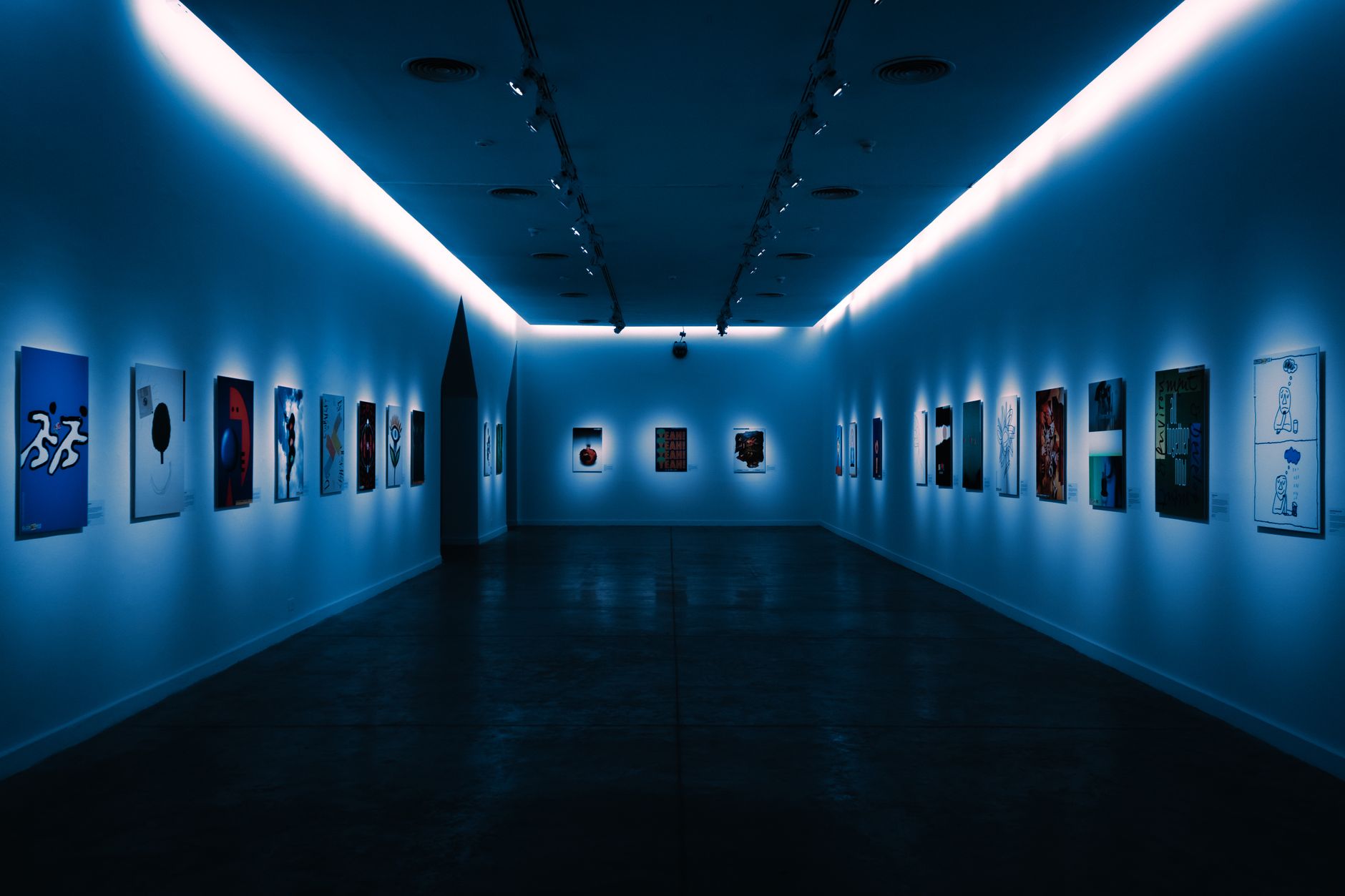
Contemporary artworks displayed in a dimly lit modern gallery space in Buenos Aires.Photo: Franco Garcia / Pexels

Unveiling Famous American Artists Names & Their Masterpieces

Dive into the vibrant world of American art and discover the visionaries who shaped its rich and diverse landscape.

Start Your Artistic Journey

Key Takeaways

  • ✓ American art is a melting pot of styles and movements, reflecting the nation's diverse history.
  • ✓ Early American artists often focused on portraiture and historical scenes.
  • ✓ The 20th century saw a dramatic rise in abstract, pop, and contemporary American art.
  • ✓ Many famous American artists achieved international acclaim, influencing global art trends.

How It Works

1
Explore Historical Figures

Begin your journey by understanding the foundational artists who laid the groundwork for American art. Learn about their techniques and societal contexts.

2
Discover Modern Mavericks

Move into the 20th century and beyond, encountering artists who challenged norms and redefined what American art could be. See how they pushed boundaries.

3
Analyze Artistic Movements

Identify key art movements like Abstract Expressionism, Pop Art, and Minimalism, and connect them to the artists who spearheaded them. Understand their philosophical underpinnings.

4
Appreciate Enduring Legacies

Reflect on how these artists and their works continue to influence contemporary art and culture. Recognize their lasting impact on the global artistic conversation.

Pioneers and Early American Masters

A commanding statue of Nathanael Greene against a clear blue sky in a Rhode Island park.Photo: Hugo Magalhaes / Pexels
The tapestry of American art begins with a foundational layer woven by pioneers who sought to define a nascent nation's visual identity. Before the United States fully established its distinct cultural voice, early American artists often looked to European traditions for inspiration, yet they quickly began to infuse their work with a unique American spirit. Figures like John Singleton Copley (1738-1815) are quintessential examples. Copley, known for his striking portraits, captured the essence of colonial society with an unprecedented psychological depth. His ability to render textures and expressions brought his subjects to life, making them feel immediate and real to viewers. Paintings such as 'Paul Revere' and 'Mrs. Thomas Boylston' are not just portraits; they are windows into the lives and aspirations of early Americans, reflecting a burgeoning sense of identity and self-reliance. His technique, while rooted in European portraiture, conveyed a directness that resonated with the American ethos. Exploring art history reveals how these early artists navigated the challenges of creating a national art form. Another towering figure from this era is Gilbert Stuart (1755-1828), whose name is virtually synonymous with presidential portraiture. His iconic 'Lansdowne' portrait of George Washington, copied countless times, became the definitive image of the nation's first president. Stuart possessed an uncanny ability to capture a sitter's character, often working quickly to maintain a fresh, spontaneous feel. His influence extended far beyond his lifetime, shaping how Americans perceived their leaders and themselves. The Hudson River School, emerging in the mid-19th century, marked a significant shift towards landscape painting, celebrating the grandeur and wilderness of the American continent. Artists like Thomas Cole (1801-1848) and Frederic Edwin Church (1826-1900) romanticized the American landscape, imbuing their vast canvases with a sense of awe, spiritual reverence, and national pride. Cole's 'The Oxbow' and Church's 'The Heart of the Andes' are not merely picturesque scenes; they are allegories of manifest destiny, environmental contemplation, and the sublime power of nature. These works helped forge a national identity tied to the land, distinguishing American art from its European counterparts. Their detailed, almost photographic realism, combined with dramatic compositions, created a visual language that spoke directly to the American experience of expansion and discovery. This period also saw the rise of genre painting, with artists like George Caleb Bingham (1811-1879) depicting scenes of everyday American life, particularly along the frontier and rivers, offering invaluable insights into the social fabric of the time. These pioneers laid the essential groundwork, establishing a rich artistic tradition that would evolve and diversify over centuries.

Modern American Art: Breaking Boundaries and Defining Eras

Dynamic abstract expressionist artwork with bold colors and textures.Photo: Steve A Johnson / Pexels
The 20th century witnessed an explosion of artistic innovation in America, as artists moved beyond traditional forms to explore new ways of seeing and representing the world. This period is rich with famous American artists names who fundamentally reshaped the global art landscape. One of the most significant movements was Abstract Expressionism, which emerged in New York City in the post-World War II era, firmly establishing America as a leading center of the art world. Jackson Pollock (1912-1956), with his revolutionary 'drip' technique, became an icon of this movement. His large-scale, intensely energetic canvases, such as 'Convergence,' were not about depicting recognizable objects but about the act of painting itself, expressing raw emotion and subconscious thought. Pollock's work epitomized action painting, where the process was as important as the finished product, challenging conventional notions of composition and artistic control. Willem de Kooning (1904-1997), another key Abstract Expressionist, explored the human figure through aggressive, gestural brushstrokes, particularly in his controversial 'Woman' series, which blurred the lines between figuration and abstraction, reflecting the anxieties and complexities of modern life. Their work marked a radical departure from previous artistic conventions, championing individual expression and challenging viewers to engage with art on a visceral level. Following on the heels of Abstract Expressionism, Pop Art burst onto the scene in the 1960s, reacting against the perceived seriousness of abstraction by embracing popular culture and mass-produced imagery. Andy Warhol (1928-1987) is arguably the most famous figure of Pop Art, transforming everyday objects like Campbell's soup cans, Coca-Cola bottles, and celebrity portraits into high art. His silkscreen prints, like 'Marilyn Diptych' and 'Eight Elvises,' questioned notions of originality, consumerism, and the cult of celebrity. Warhol's factory-like production methods and his blurring of art and commerce were profoundly influential, extending beyond painting into film, music, and fashion. Roy Lichtenstein (1923-1997) similarly drew inspiration from comic strips, using Ben-Day dots and bold outlines to create monumental works that satirized and celebrated popular imagery. His 'Whaam!' and 'Drowning Girl' are instantly recognizable, bringing a playful yet critical eye to American consumer culture and media. These artists not only changed what art looked like but also how it was made and perceived, bridging the gap between high art and popular culture. Minimalism, a counter-movement to the expressive nature of Abstract Expressionism and the commercialism of Pop Art, also found significant American proponents. Donald Judd (1928-1994) and Sol LeWitt (1928-2007) championed simplicity, geometric forms, and industrial materials, focusing on the object itself and its relationship to space. Judd's 'stacks' and 'progressions' explored volume and repetition, while LeWitt's conceptual wall drawings emphasized the idea behind the artwork over its physical execution. These artists stripped away extraneous elements, aiming for purity and directness, inviting viewers to experience the work in a purely sensory and intellectual way. The mid-to-late 20th century was a period of intense experimentation, where American artists continually pushed boundaries, creating a diverse and dynamic artistic landscape that continues to influence contemporary practice today.

Diverse Voices and Contemporary Icons in American Art
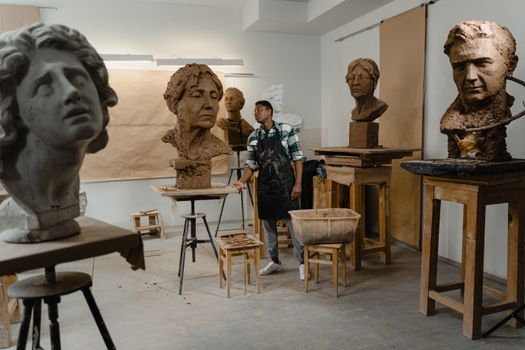
A sculptor working on clay busts in an art studio, surrounded by handmade sculptures.Photo: Tima Miroshnichenko / Pexels
The narrative of famous American artists names would be incomplete without acknowledging the rich tapestry of diverse voices that have shaped and continue to define the nation's artistic output. The latter half of the 20th century and the early 21st century have seen an increasing recognition of artists from varied backgrounds, whose perspectives have broadened the scope and deepened the meaning of American art. Georgia O'Keeffe (1887-1986), though beginning her career much earlier, achieved widespread recognition for her unique approach to modernism, particularly her iconic close-ups of flowers, New York skyscrapers, and New Mexico landscapes. Her ability to abstract natural forms while retaining their essence, as seen in 'Jimson Weed/White Flower No. 1' or 'Black Iris III,' carved out a distinct path for American modernism, blending natural beauty with a powerful, almost spiritual abstraction. Her work challenged traditional feminine roles in art and established her as a fiercely independent and influential figure. Her legacy continues to inspire artists to find the extraordinary in the ordinary and to explore deeply personal connections to their environment. Kehinde Wiley (b. 1977) represents a powerful contemporary voice, known for his highly naturalistic portraits of Black people, often posed in the style of Old Master paintings. Wiley's work, such as his portrait of Barack Obama, directly addresses issues of race, power, and representation, inserting Black figures into art historical narratives from which they have traditionally been excluded. His vibrant colors, intricate patterns, and grand scale reimagine historical portraiture, offering a critical commentary on identity and perception. His work prompts viewers to reconsider who is deemed worthy of monumental representation and how historical narratives are constructed. Similarly, Kara Walker (b. 1969) confronts the painful history of race and gender in the American South through her provocative and often unsettling silhouette installations. Works like 'A Subtlety, or the Marvelous Sugar Baby' or her intricate paper cutouts explore themes of slavery, sexuality, and violence with unflinching honesty, forcing uncomfortable but necessary conversations about America's past and its lingering impact. Her powerful narratives challenge conventional interpretations of history and identity, demonstrating the enduring power of art to provoke thought and facilitate dialogue. For more on the broader context of contemporary arts, consider exploring how these artists fit into global movements. Jean-Michel Basquiat (1960-1988), though his career was tragically short, left an indelible mark on the art world with his raw, expressive, and politically charged paintings. Emerging from the New York graffiti scene, Basquiat's work, like 'Untitled (Skull)' or 'Irony of Negro Policeman,' combined text, symbols, and figures to critique social inequalities, consumerism, and racial prejudice. His unique style, often described as neo-expressionist, fused street art aesthetics with high art concerns, making him a crucial figure in the downtown New York art scene of the 1980s. These diverse artists, among many others, have enriched American art by bringing new perspectives, challenging existing canons, and engaging with complex social and political issues. Their contributions ensure that American art remains a dynamic and evolving field, reflecting the multifaceted experiences of its people.

Tips for Appreciating and Exploring American Art
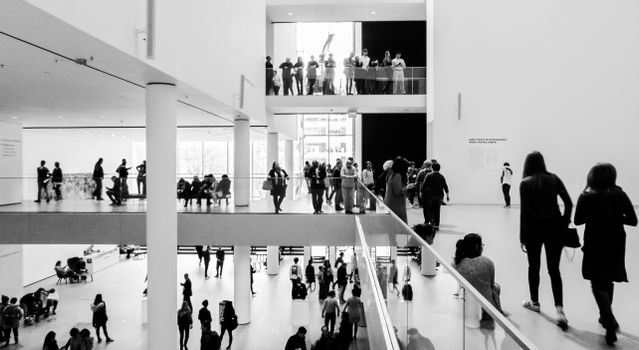
A dynamic black and white image of people in a modern museum setting.Photo: Bjorn Pierre / Pexels
Engaging with the rich legacy of famous American artists names can be an incredibly rewarding experience. To deepen your appreciation and understanding, consider these practical tips: * **Visit Local Museums and Galleries:** The most direct way to experience art is in person. Museums across the US, from the Metropolitan Museum of Art in New York to the Art Institute of Chicago and the Los Angeles County Museum of Art, house extensive collections of American art. Look for special exhibitions that highlight specific artists or movements. Seeing the scale, texture, and color of a painting or sculpture firsthand offers an entirely different perspective than viewing it online. * **Read Artist Biographies and Art History Books:** Understanding an artist's life, their historical context, and the challenges they faced can significantly enhance your appreciation of their work. Biographies provide personal insights, while art history texts offer broader contextual understanding of movements and influences. Look for books that offer critical analysis rather than just factual recounting. * **Explore Online Resources and Virtual Tours:** Many major museums now offer extensive online collections and virtual tours. Websites like the Smithsonian American Art Museum, the National Gallery of Art, and Google Arts & Culture provide high-resolution images, detailed descriptions, and educational content that can be accessed from anywhere. This is an excellent way to discover new artists or revisit familiar favorites. * **Engage with Art Critiques and Documentaries:** Reading different interpretations of an artwork can open up new ways of seeing and understanding it. Art critics often provide historical context, theoretical frameworks, and personal insights. Documentaries about artists or art movements can also offer a compelling visual and narrative journey into their world, bringing their stories to life. * **Attend Lectures and Workshops:** Many cultural institutions offer lectures by curators, art historians, or even contemporary artists. These events provide opportunities to learn directly from experts and engage in discussions. Workshops can even allow you to experiment with techniques used by famous artists, offering a hands-on understanding of their craft. * **Reflect and Journal:** Take time to reflect on what you see and feel when encountering a piece of art. What emotions does it evoke? What questions does it raise? Journaling about your experiences can help solidify your understanding and personal connection to the artwork and the artist.

Comparison

ArtistPrimary MovementKey ContributionSignature Work
Jackson PollockAbstract ExpressionismAction painting, drip techniqueConvergence
Andy WarholPop ArtMass production, celebrity cultureMarilyn Diptych
Georgia O'KeeffeAmerican ModernismAbstracted natural formsJimson Weed/White Flower No. 1
Kehinde WileyContemporary PortraitureReimagining historical portraiture with Black subjectsPortrait of Barack Obama

What Our Readers Say

5 ★★★★★

"This article on famous American artists names is a masterpiece! It provided such a comprehensive overview, connecting historical figures to modern icons seamlessly. I feel much more informed and inspired."

5 ★★★★★

"I've always wanted to learn more about American art, and this guide was perfect. The details about Abstract Expressionism and Pop Art were particularly insightful. Highly recommend for anyone curious about art history."

5 ★★★★★

"Before reading this, my knowledge of famous American artists names was limited. Now, I can confidently discuss artists from Copley to Wiley. My next museum visit will be so much richer because of this article."

4 ★★★★☆

"A truly excellent resource. While I wish there were a few more specific examples of early American sculptors, the depth of coverage for painters is outstanding. A must-read for art enthusiasts."

5 ★★★★★

"As an art student, I found this article to be an invaluable refresher and source of new perspectives. The emphasis on diverse voices in contemporary art was especially appreciated and well-articulated. Great job!"

Frequently Asked Questions

Who are some of the most famous American artists names from the 20th century?
The 20th century saw a boom in American art, with iconic figures like Jackson Pollock (Abstract Expressionism), Andy Warhol (Pop Art), Georgia O'Keeffe (American Modernism), Edward Hopper (Realism), and Jean-Michel Basquiat (Neo-Expressionism) emerging as leading voices. These artists significantly influenced global art movements and reshaped artistic conventions.
Is American art primarily focused on European traditions?
While early American art drew heavily from European traditions, particularly in portraiture and academic styles, it quickly developed its own distinct identity. Movements like the Hudson River School emphasized American landscapes, and 20th-century movements like Abstract Expressionism and Pop Art firmly established America as a global art leader, moving away from European dominance.
How can I start learning more about famous American artists names?
A great starting point is visiting major art museums with American art collections, such as the Metropolitan Museum of Art, the Art Institute of Chicago, or the Smithsonian American Art Museum. Additionally, exploring online museum databases, reading art history books, watching documentaries, and attending local art lectures can significantly deepen your understanding and appreciation.
What is the value of studying famous American artists?
Studying famous American artists offers insights into the nation's cultural, social, and political history. Their works reflect evolving American identity, diverse experiences, and critical perspectives on society. It also provides a foundational understanding of modern and contemporary art movements, many of which originated or were significantly developed in the US.
How do contemporary American artists compare to historical figures?
Contemporary American artists often build upon or challenge the legacies of historical figures. While they may use new mediums and address current social issues, they frequently engage with themes of identity, power, and representation that have always been central to art. The comparison highlights both continuity and evolution in artistic expression and societal concerns.
Who should explore famous American artists names?
Anyone with an interest in art, history, American culture, or seeking to understand the evolution of visual expression should explore famous American artists. It's beneficial for students, art enthusiasts, cultural tourists, and anyone looking to broaden their appreciation for creativity and its impact on society.
Are there risks in interpreting American art without historical context?
Yes, interpreting art without historical context can lead to misunderstandings or incomplete appreciation. Art is often a product of its time, reflecting societal values, political climates, and technological advancements. Understanding the context helps to grasp the artist's intentions, the work's original impact, and its ongoing relevance.
What future trends might we see in American art?
Future trends in American art are likely to continue embracing diversity, technology (e.g., AI art, digital installations), and interdisciplinary approaches. Expect more emphasis on environmental themes, social justice, and global interconnectedness, with artists continually pushing boundaries in both form and content, reflecting an ever-evolving society.

Embark on your own artistic discovery journey by exploring the incredible contributions of famous American artists names. Their powerful works and inspiring stories offer a profound connection to the nation's rich cultural heritage. Dive deeper and let their masterpieces ignite your imagination.

Topics: famous american artists namesAmerican paintersiconic US artistsart history Americainfluential American art
Leo List
Brampton weed
Adultwork