Unveiling Famous Renaissance Artists and Works: A Journey Through Genius
famous Renaissance artists and works

Unveiling Famous Renaissance Artists and Works: A Journey Through Genius

Dive into the extraordinary world of Renaissance art, exploring the visionary minds and timeless creations that defined an era.

Begin Your Art Journey

Key Takeaways

  • ✓ The Renaissance (roughly 1300-1600) marked a rebirth of classical ideals in art, science, and philosophy.
  • ✓ Florence, Italy, was a primary cradle of the early Renaissance, fostering groundbreaking artistic innovation.
  • ✓ Perspective, humanism, and naturalism were key artistic principles embraced by Renaissance masters.
  • ✓ Leonardo da Vinci, Michelangelo, and Raphael are often considered the 'Holy Trinity' of the High Renaissance.

How It Works

1
Understand the Historical Context

Before delving into individual artists, grasp the socio-political and intellectual climate of the Renaissance. This period's emphasis on humanism and classical revival profoundly influenced artistic expression.

2
Explore Key Artistic Principles

Familiarize yourself with defining characteristics like linear perspective, sfumato, chiaroscuro, and contrapposto. These techniques were revolutionary and became hallmarks of Renaissance masterpieces.

3
Discover the Masters and Their Works

Delve into the lives and iconic creations of artists like Leonardo, Michelangelo, Raphael, and Botticelli. Understand their unique styles, influences, and the stories behind their most famous pieces.

4
Recognize the Enduring Legacy

Appreciate how Renaissance art continues to shape Western culture, influencing subsequent art movements and architectural styles. Its impact is still felt in contemporary art and design.

The Dawn of a New Era: Early Renaissance Masters and Their Innovations
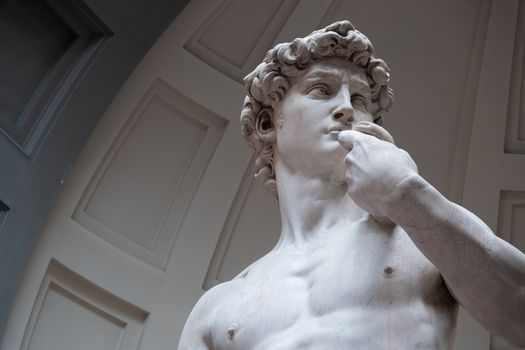
Close-up of Michelangelo's David sculpture displayed indoors in Florence, Italy. Photo: Raffaella Troiano / Pexels
The Early Renaissance, primarily centered in Florence during the 14th and 15th centuries, marked a pivotal shift from the rigid, symbolic art of the Middle Ages to a more naturalistic and human-centric approach. This period laid the foundational groundwork for the artistic explosion that would follow. Artists began to challenge conventional methods, experimenting with new techniques that brought unprecedented realism and emotion to their works. One of the most significant innovations was the rediscovery and application of linear perspective, a mathematical system for creating the illusion of depth on a flat surface. Filippo Brunelleschi, a brilliant architect, is credited with formally articulating these principles, which Masaccio then masterfully applied in his frescoes, most notably in the 'Holy Trinity' at Santa Maria Novella. Masaccio’s bold use of perspective, along with his emphasis on naturalistic human forms and dramatic lighting (chiaroscuro), set a new standard for painting. His figures possessed a weight and psychological depth previously unseen, moving away from the flat, two-dimensional representations of the past. Beyond perspective, the Early Renaissance also saw a renewed interest in classical antiquity. Artists studied ancient Roman and Greek sculptures, incorporating ideals of anatomical accuracy and idealized beauty into their own creations. Donatello, a groundbreaking sculptor, epitomized this classical revival. His bronze 'David,' the first free-standing nude sculpture since antiquity, showcased a profound understanding of human anatomy and emotional expression. This work was revolutionary not just for its nudity, but for its psychological intensity and the youthful vulnerability it portrayed. Another titan of this era was Sandro Botticelli, whose works, while still rooted in Christian themes, also embraced mythological subjects, reflecting the burgeoning humanism of the period. His 'Birth of Venus' and 'Primavera' are iconic examples, depicting classical goddesses with ethereal beauty and graceful movement, imbued with a sense of poetic narrative. These paintings, rich in symbolism and delicate detail, represented a departure from purely religious art, hinting at the secular interests that would become more prominent. The patronage of wealthy families, like the Medicis in Florence, played a crucial role in fostering this artistic environment, providing financial support and intellectual freedom that allowed these artists to flourish and innovate. Without such patronage, many of these masterpieces might never have been created. The Early Renaissance was a period of intense intellectual curiosity and artistic experimentation, where the seeds of modern art were sown, forever changing the trajectory of Western culture. For more insights into this transformative period, explore our article on the evolution of art movements. This foundational period truly paved the way for the artistic zenith of the High Renaissance, demonstrating the power of human ingenuity and creative ambition.

The Golden Age: High Renaissance Icons and Their Masterpieces
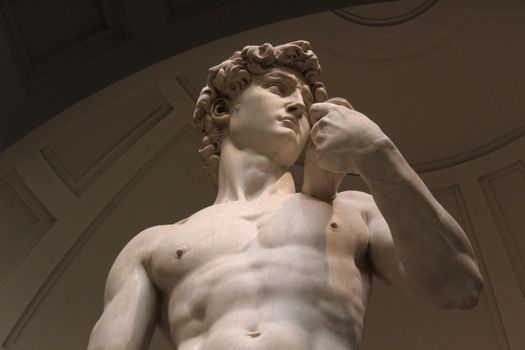
A low-angle view of Michelangelo's iconic David statue, showcasing Renaissance art. Photo: Brendana Vallée / Pexels
The High Renaissance, spanning roughly from the late 15th century to the early 16th century, represents the pinnacle of Renaissance artistic achievement, characterized by a harmonious blend of classical ideals, technical mastery, and emotional depth. This relatively brief but intensely productive period produced some of the most universally recognized and celebrated artworks in history. The triumvirate of Leonardo da Vinci, Michelangelo Buonarroti, and Raphael Sanzio stands as the undisputed heart of this golden age, each contributing unparalleled genius that pushed the boundaries of artistic expression. Leonardo da Vinci, the quintessential Renaissance man, embodied the era's spirit of inquiry and innovation. His insatiable curiosity led him to excel not only as a painter but also as a scientist, engineer, anatomist, and inventor. In painting, his revolutionary techniques like sfumato (a soft, hazy blurring of lines and colors, creating a smoky effect) and chiaroscuro (the use of strong contrasts between light and dark) brought unprecedented realism and psychological complexity to his portraits. The 'Mona Lisa,' with her enigmatic smile and deep-set eyes, remains one of the most famous and debated artworks globally, captivating viewers with its subtle expressions and atmospheric perspective. His 'Last Supper,' a monumental fresco, revolutionized religious painting through its dramatic composition, emotional intensity, and psychological portrayal of each apostle. Michelangelo, a sculptor of unparalleled power, believed that the form was already present within the marble, and his task was merely to release it. His 'David,' carved from a single block of marble, is a breathtaking testament to human potential and anatomical perfection, standing as a symbol of Florentine liberty. The Sistine Chapel ceiling, a colossal undertaking, showcases his mastery of fresco painting, depicting scenes from Genesis with an epic scope and dynamic energy that transformed the chapel into a spiritual narrative. His 'Pietà' in St. Peter's Basilica, an early work, displays an exquisite tenderness and sorrow, demonstrating his ability to infuse cold marble with profound human emotion. Raphael, the youngest of the three, was celebrated for his grace, harmony, and clarity. His works often combined the naturalism of Leonardo with the grandeur of Michelangelo, yet possessed a unique lyrical quality. His Madonnas, such as the 'Sistine Madonna,' are renowned for their serene beauty and idealized forms, conveying a sense of divine grace. The frescoes in the Vatican's Stanze della Segnatura, particularly 'The School of Athens,' exemplify his genius for composition, depicting a gathering of ancient philosophers and thinkers in a grand architectural setting, celebrating intellectual pursuit and classical wisdom. The High Renaissance was not just about individual brilliance; it was a period where art became a profound vehicle for expressing philosophical ideas, religious devotion, and humanistic ideals, leaving an indelible mark on the cultural landscape of the world. These artists, through their tireless dedication and visionary talents, truly defined what it meant to be a master, creating works that continue to inspire awe and wonder centuries later.

Beyond Italy: The Northern Renaissance and Its Distinctive Contributions
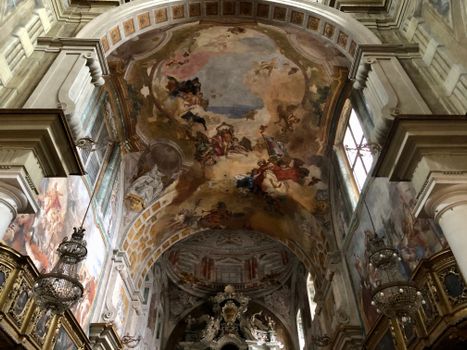
Captivating frescoed ceiling inside a historic church in Lombardy, Italy. Photo: A G / Pexels
While Italy was undoubtedly the epicenter of the Renaissance, a distinct and equally significant artistic movement flourished concurrently in Northern Europe, particularly in Flanders, the Netherlands, and Germany. The Northern Renaissance, though sharing the Italian Renaissance's renewed interest in naturalism and humanism, developed its own unique characteristics and artistic priorities. Unlike the Italian focus on idealized forms, classical mythology, and grand frescoes, Northern artists often emphasized meticulous detail, intense realism, and a profound engagement with religious symbolism and everyday life. The invention of oil painting, perfected by artists like Jan van Eyck, was a pivotal innovation that profoundly influenced the Northern Renaissance. Oil paints allowed for richer colors, smoother transitions, and the ability to capture incredibly fine details, from the texture of fabrics to the reflections in a mirror. Van Eyck's 'Arnolfini Portrait' is a masterful example, a testament to his technical virtuosity and keen observational skills. Every element in the painting, from the intricate folds of the drapery to the tiny reflections in the convex mirror, is rendered with astonishing precision, revealing layers of symbolism related to marriage, wealth, and devotion. This level of detail invited viewers to scrutinize the artwork, discovering hidden meanings and narratives within the seemingly mundane. Another towering figure of the Northern Renaissance was Albrecht Dürer, a German painter, printmaker, and theorist. Dürer traveled to Italy, where he absorbed the principles of perspective and anatomy, but he integrated these classical ideals with the Northern tradition of meticulous detail and expressive realism. His woodcuts and engravings, such as 'Melencolia I' and 'Adam and Eve,' are renowned for their technical brilliance, intricate symbolism, and intellectual depth. Dürer's self-portraits are also remarkable, showcasing an early form of psychological introspection and a bold assertion of the artist's individuality. Hieronymus Bosch, a Dutch painter, stands apart with his fantastical and often unsettling dreamscapes. His most famous work, 'The Garden of Earthly Delights,' is a triptych teeming with bizarre creatures, symbolic imagery, and moral allegories, offering a complex commentary on sin, salvation, and human folly. Bosch's unique vision diverged significantly from the harmonious compositions of his Italian counterparts, yet his imaginative power and intricate narratives captivated audiences. Pieter Bruegel the Elder, another prominent Dutch artist, specialized in genre scenes depicting peasant life, landscapes, and proverbs. His works, like 'The Peasant Wedding' and 'Hunters in the Snow,' offer invaluable insights into 16th-century rural life, rendered with a keen eye for human nature and social commentary. Bruegel's ability to capture the vibrancy and struggles of everyday people provided a distinct perspective from the aristocratic and religious themes prevalent in Italy. The Northern Renaissance, with its emphasis on intense realism, detailed symbolism, and the revolutionary use of oil paint, offered a rich and diverse counterpoint to the Italian Renaissance. It expanded the thematic range of art, delving into the intricacies of human experience and the natural world, and left an enduring legacy on Western art, influencing subsequent movements and artists for centuries to come. For more on the broader context of artistic innovation, see our article on the history of art.

Appreciating Renaissance Art: Tips for Deeper Engagement and Common Misconceptions
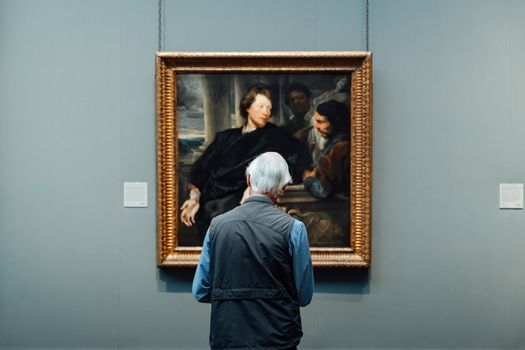
Senior admiring a classic painting in an English art gallery. Engrossed in art appreciation. Photo: Miguel González / Pexels
Engaging with Renaissance art goes beyond simply admiring its beauty; it involves understanding the layers of meaning, the historical context, and the artistic intentions behind each masterpiece. To truly appreciate these famous Renaissance artists and works, consider these tips and be aware of common misconceptions that can hinder a deeper understanding. **Tips for Deeper Engagement:** * **Research the Patronage:** Many Renaissance works were commissioned. Understanding who commissioned the art, why, and for what purpose can reveal crucial insights into its subject matter, symbolism, and even the choice of artist. For example, the Medici family's patronage significantly shaped Florentine art. * **Understand Iconography and Symbolism:** Renaissance art is rich in symbolism, often drawing from classical mythology, Christian theology, and contemporary proverbs. A seemingly simple object, like a dog or a fruit, can carry profound meaning. Learning about common symbols of the era will unlock hidden narratives. * **Consider the Viewer's Perspective:** These artworks were not created for sterile museum walls. Many were made for specific architectural settings – chapels, private homes, public squares. Imagine how they would have been viewed in their original context, with natural light and within a lived environment. * **Study the Artist's Life and Influences:** An artist's personal experiences, intellectual pursuits, and the influences of their peers and predecessors profoundly shaped their style and themes. Knowing about Leonardo's scientific curiosity or Michelangelo's spiritual struggles enriches the viewing experience. * **Pay Attention to Technical Details:** Notice the brushwork, the use of color, the composition, and the handling of light and shadow. These technical choices were deliberate and contribute significantly to the artwork's overall impact and emotional resonance. * **Visit Museums and Galleries:** There is no substitute for seeing these masterpieces in person. The scale, texture, and subtle nuances of color are lost in reproductions. Plan visits to major collections to experience the art firsthand. **Common Misconceptions to Avoid:** * **Myth 1: The Renaissance was a sudden, unified explosion of art.** While it was a period of rapid change, the Renaissance was a gradual process that evolved over centuries, with regional variations and distinct phases (Early, High, Northern). It wasn't a singular, monolithic movement. * **Myth 2: Renaissance art is solely about religious subjects.** While religious themes were dominant, especially in Italy, the Renaissance also saw a significant rise in secular portraiture, mythological scenes, and genre painting, reflecting the era's humanistic ideals and growing interest in the individual and the natural world. * **Myth 3: All Renaissance artists were celebrated geniuses in their time.** While some, like Raphael, achieved widespread fame, others faced challenges, criticisms, or even obscurity during their lifetimes. The concept of the 'artist as genius' evolved over time. * **Myth 4: Renaissance art is purely realistic.** While naturalism and anatomical accuracy were highly valued, Renaissance artists often idealized their figures and compositions to achieve a sense of perfection and harmony, rather than striving for photographic realism. * **Myth 5: The Renaissance was a complete break from the Middle Ages.** Many artistic and intellectual traditions of the Middle Ages continued into the Renaissance, albeit transformed and reinterpreted. It was more of a 'rebirth' and re-evaluation than a complete rejection. By approaching Renaissance art with curiosity, an open mind, and a willingness to delve into its rich history, you can unlock a far deeper and more rewarding appreciation for these timeless works and the extraordinary minds that created them.

Comparison

FeatureItalian RenaissanceNorthern RenaissanceMedieval Art
Primary FocusIdealized forms, classical mythology, humanismRealistic detail, everyday life, religious symbolismSymbolic, spiritual, abstract
Key InnovationLinear perspective, anatomical studyOil painting, intricate realismStained glass, manuscript illumination
Dominant ThemesReligious, mythological, portraitureReligious, genre scenes, landscape, portraitureBiblical narratives, saints
Artistic StyleHarmonious, balanced, emotional grandeurMeticulous, expressive, often darker tonesFlat, hieratic, stylized
Key MediumsFresco, tempera, marble sculptureOil on panel, woodcuts, engravingsFresco, mosaic, tempera, sculpture
Example ArtistsLeonardo, Michelangelo, RaphaelVan Eyck, Dürer, BoschGiotto (transitional), Byzantine masters

What Readers Say

"This article on famous Renaissance artists and works is incredibly comprehensive! It breaks down complex concepts into digestible information, making it easy to understand the nuances of each artist's contribution. Truly a treasure trove for art lovers."

Sarah J. · Boston, MA

"As an art history student, I found this resource invaluable. The detailed explanations of techniques like sfumato and chiaroscuro, alongside the historical context, greatly enhanced my understanding of famous Renaissance artists and works. Highly recommended for anyone studying the period."

Mark D. · San Francisco, CA

"I've always been fascinated by Renaissance art, but this article truly deepened my appreciation. It helped me connect the dots between different artists and movements, giving me a much clearer picture of how these famous Renaissance artists and works shaped Western culture. My next museum visit will be much more informed!"

Emily R. · Austin, TX

"The content is superb, offering a rich exploration of famous Renaissance artists and works. While I wished for even more visual examples within the text, the depth of information provided is exceptional and very well-researched. A fantastic educational resource overall."

David L. · Chicago, IL

"I'm a casual art enthusiast, and this article was perfect for me. It wasn't overly academic, but still incredibly informative about famous Renaissance artists and works. It sparked a renewed interest in visiting Italy to see these masterpieces firsthand."

Jessica M. · Miami, FL

Frequently Asked Questions

Who are considered the most famous Renaissance artists?

The 'Holy Trinity' of the High Renaissance—Leonardo da Vinci, Michelangelo Buonarroti, and Raphael Sanzio—are widely considered the most famous. Other pivotal figures include Donatello, Botticelli, Jan van Eyck, and Albrecht Dürer, each renowned for their groundbreaking contributions to art.

What makes Renaissance art so significant?

Renaissance art is significant because it marked a profound shift from the medieval emphasis on the spiritual to a focus on humanism, naturalism, and classical ideals. It introduced revolutionary techniques like linear perspective and oil painting, influencing nearly all subsequent Western art movements and establishing the artist as an intellectual figure.

How can I identify a Renaissance painting?

You can often identify a Renaissance painting by its use of linear perspective to create depth, realistic portrayal of human anatomy and emotion, harmonious composition, and often a focus on classical or religious themes. Look for techniques like sfumato (soft transitions) and chiaroscuro (strong light-dark contrasts).

What was the role of patronage in the Renaissance?

Patronage was crucial in the Renaissance. Wealthy families (like the Medicis), the Church, and civic bodies commissioned artworks, providing financial stability and creative freedom for artists. This support allowed artists to undertake large-scale projects and experiment with new techniques, directly fueling the artistic boom.

How does the Northern Renaissance differ from the Italian Renaissance?

While both shared a spirit of humanism and naturalism, the Northern Renaissance emphasized meticulous detail, intense realism, and often moral or religious symbolism, favoring oil on panel. The Italian Renaissance focused more on idealized forms, classical themes, and grand frescoes, often prioritizing balance and harmony.

Who should explore famous Renaissance artists and works?

Anyone interested in art history, cultural development, or the power of human creativity should explore famous Renaissance artists and works. Students, art enthusiasts, travelers planning trips to Europe, and those seeking to understand the foundations of Western aesthetics will find immense value in this period.

Is Renaissance art still relevant today?

Absolutely. Renaissance art remains highly relevant today, influencing contemporary artists, designers, and architects. Its principles of composition, perspective, and humanistic themes continue to resonate, offering timeless lessons in beauty, storytelling, and the profound capabilities of human expression. Its cultural impact is enduring.

What is the future trend for appreciating Renaissance art?

Future trends in appreciating Renaissance art involve increasing use of digital technologies like virtual reality and augmented reality for immersive experiences, making masterpieces accessible globally. There's also a growing focus on interdisciplinary studies, connecting art with science, philosophy, and social history for a more holistic understanding.

Embark on your own journey through the masterpieces and revolutionary minds of the Renaissance. Delve deeper into the famous Renaissance artists and works that continue to inspire awe and shape our understanding of art and humanity. Start exploring today and uncover the timeless genius of this extraordinary era.

Topics: famous Renaissance artists and worksRenaissance art historyItalian Renaissance masterpiecesHigh Renaissance paintersRenaissance sculpture
Leo List

DK Escorts LU Escorts AT Escorts SE Escorts FI Escorts CH Escorts DE Escorts HR Escorts IE Escorts GR Escorts CZ Escorts NO Escorts BE Escorts FR Escorts SI Escorts IL Escorts NL Escorts PL Escorts HU Escorts ES Escorts IT Escorts PT Escorts SK Escorts RO Escorts ZA Escorts UY Escorts US Escorts UK Escorts NZ Escorts AU Escorts
Brampton weed
Adultwork EstrelaBet Vai de Bet R7 Bet Betão Galera Bet Rainbet Bet9ja Shop SportyBet BetKing Sisal Loto Foot Hollywoodbets YesPlay Odibets RushBet Jugabet BetWarrior BetCity MSport betPawa Fortebet