
The History of Abstract Expressionism: A Deep Dive
Explore the revolutionary artistic movement that redefined American art and captured the post-war zeitgeist.
Discover the RevolutionKey Takeaways
- ✓ Abstract Expressionism emerged in New York City in the 1940s.
- ✓ It was the first American art movement to achieve international prominence.
- ✓ Key figures include Jackson Pollock, Mark Rothko, and Willem de Kooning.
- ✓ The movement emphasized spontaneous, emotional expression and large-scale canvases.
How It Works
Learn about the European influences like Surrealism and Cubism that laid the groundwork for Abstract Expressionism. Recognize the shift from European art dominance to American innovation.
Delve into the vibrant intellectual and artistic environment of post-war New York City. Discover how artists, critics, and galleries fostered this groundbreaking movement.
Familiarize yourself with the diverse approaches within Abstract Expressionism, such as 'action painting' and 'color field painting.' Understand the unique contributions of its leading practitioners.
Appreciate how Abstract Expressionism challenged traditional art norms and paved the way for subsequent art movements. Reflect on its enduring influence on contemporary art and culture.
The Genesis of a Movement: Post-War America and European Influences
 Photo: code mnml / Pexels
The Rise of the New York School: Key Figures and Divergent Styles
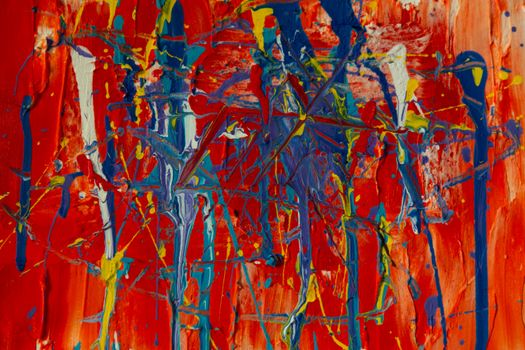 Photo: Steve A Johnson / Pexels
Impact and Legacy: Abstract Expressionism's Enduring Influence on Modern Art
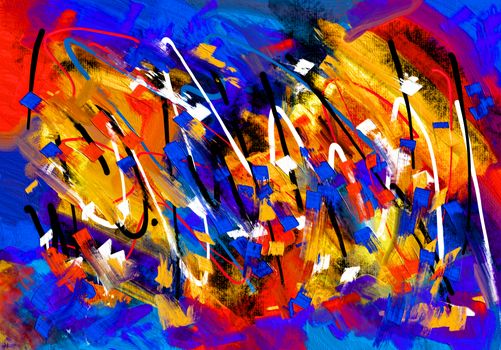 Photo: Steve A Johnson / Pexels
Navigating the Nuances: Common Misconceptions and Key Takeaways
Photo: Steve A Johnson / Pexels
Comparison
| Feature | Abstract Expressionism | Cubism | Surrealism |
|---|---|---|---|
| Origin Period | 1940s-1950s (NYC) | 1907-1914 (Paris) | 1920s-1930s (Paris) |
| Key Focus | Emotion, subconscious, spontaneity | Geometric forms, multiple perspectives | Dreams, subconscious, irrationality |
| Primary Technique | Action/Color Field Painting | Geometric fragmentation | Automatism, dream imagery |
| Figuration | Largely abstract (some vestiges) | Fragmented, deconstructed | Often figurative, but distorted |
| Cultural Impact | Shifted art world to US | Revolutionized representation | Influenced literature, film, psychology |
| Key Artists | Pollock, Rothko, de Kooning | Picasso, Braque | Dalí, Magritte, Miró |
What Readers Say
"This article provided an incredibly thorough and engaging history of Abstract Expressionism. I finally understand the nuances between action painting and color field, and the context of post-war America makes so much sense."
Eleanor Vance · Boston, MA"As an art student, I found this deep dive invaluable. The explanations of key artists and their techniques were clear and insightful, truly enhancing my appreciation for the movement."
Marcus Chen · Los Angeles, CA"I've always been intimidated by Abstract Expressionism, but this article broke it down beautifully. I now feel confident discussing its origins and impact, and I'm inspired to visit a museum to see these works firsthand."
Sarah Jenkins · Chicago, IL"A very comprehensive overview. While I would have liked a bit more on the political implications, the discussion of the New York School and European influences was excellent and well-researched."
David Rodriguez · Austin, TX"Living in NYC, I often see these works. This article gave me a profound new understanding of the history of Abstract Expressionism, connecting the art to the vibrant energy of the city during that era. Highly recommend!"
Priya Sharma · New York, NYFrequently Asked Questions
What is the most defining characteristic of Abstract Expressionism?
The most defining characteristic is its emphasis on spontaneous, emotional, and subjective expression. Artists sought to convey their inner psychological states directly onto the canvas, often through large-scale, non-representational forms, making the act of creation a deeply personal and often cathartic experience.
Was Abstract Expressionism a unified movement with a single style?
No, Abstract Expressionism was not a monolithic movement. It encompassed diverse styles, primarily categorized into 'Action Painting' (e.g., Jackson Pollock, Willem de Kooning) which focused on the physical act of painting, and 'Color Field Painting' (e.g., Mark Rothko, Barnett Newman) which emphasized large, flat areas of color for emotional impact. Despite differences, they shared a common spirit of intense personal expression.
How did Abstract Expressionism get its name?
The term 'Abstract Expressionism' was first used in 1946 by art critic Robert Coates in The New Yorker. He applied it to the work of artists like Hans Hofmann and Arshile Gorky, recognizing their blend of abstract forms with the emotional intensity reminiscent of German Expressionism. The artists themselves didn't universally adopt the label, but it stuck.
What was the economic context for the rise of Abstract Expressionism?
Abstract Expressionism emerged in the post-World War II era, a period of economic growth and increasing national confidence in the United States. While individual artists often struggled financially, government initiatives like the Federal Art Project during the Depression had fostered a generation of artists, and the burgeoning American economy allowed for the development of galleries, museums, and collectors that supported the movement, shifting the art market's focus to New York.
How does Abstract Expressionism compare to Surrealism?
While Abstract Expressionism was heavily influenced by Surrealism, particularly its emphasis on the subconscious and automatism, it ultimately diverged. Surrealism often retained recognizable, though distorted, imagery from dreams and the unconscious, aiming to shock. Abstract Expressionism, especially in its later forms, moved towards pure abstraction, using color, line, and form to directly express emotion rather than depicting dreamscapes.
Who should study the history of Abstract Expressionism?
Anyone interested in the evolution of modern art, the cultural history of post-war America, or the power of artistic expression should study the history of Abstract Expressionism. It's particularly valuable for art students, historians, and enthusiasts seeking to understand how art reflects societal shifts and individual psychological states.
Was Abstract Expressionism controversial?
Yes, Abstract Expressionism was highly controversial, especially in its early stages. Its radical departure from traditional representation, large scale, and seemingly chaotic appearance often bewildered and angered critics and the public. It challenged established notions of what art should be, leading to debates about its value, meaning, and even its legitimacy as art.
What are the future trends in the study of Abstract Expressionism?
Future trends in the study of Abstract Expressionism are likely to include more in-depth analyses of the contributions of women artists and artists of color within the movement, re-evaluations of its political and social contexts, and continued exploration of its global influence beyond the US. There's also growing interest in digital humanities approaches to analyze the artists' techniques and influences.
Embark on your own journey through the history of Abstract Expressionism. Explore the works of its masters, understand its profound impact, and let its revolutionary spirit inspire your appreciation for modern art.